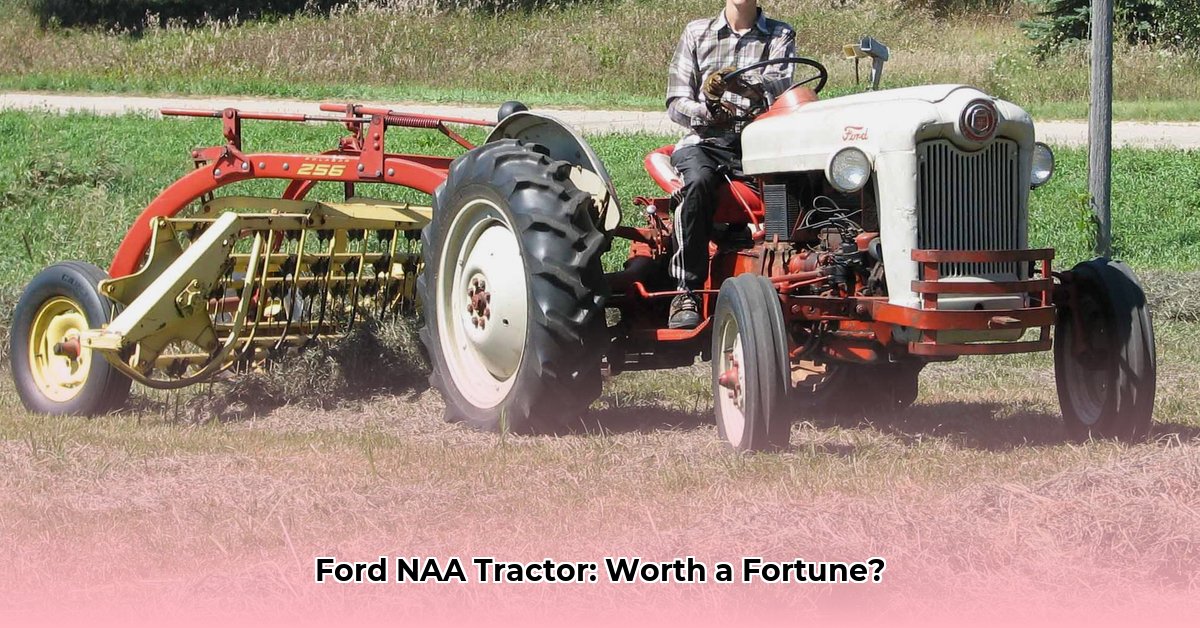
The Ford NAA tractor—a classic of the mid-20th century—isn't just a piece of farm equipment; it's a piece of history and, for some, a smart investment. This article provides a comprehensive guide to the Ford NAA, covering its history, technical specifications, market analysis, and crucial buying advice. Whether you're a seasoned collector or a curious newcomer, we'll help you navigate this iconic tractor's world. For sale listings and more, check out this resource.
A Look Back: The Ford NAA's Legacy
The Ford NAA, produced between 1952 and 1959 (with approximately 128,965 units manufactured), defined an era of American farming. Its compact size and surprisingly powerful engine—often exceeding its advertised 20.2 horsepower—made it a favorite among farmers. This blend of efficiency and power, along with its relatively simple design, has contributed to its continued popularity among collectors. But how much does a piece of this agricultural history cost, and what makes it valuable today?
Under the Hood: Technical Specifications and Performance
The Ford NAA's engine, while originally advertised as 20.2 horsepower, consistently outperformed expectations in real-world applications, often delivering closer to 26-31 horsepower. This discrepancy highlights the difference between advertised power and actual capabilities in vintage machinery. Its straightforward three-speed manual transmission further adds to its simple, robust nature. Its straightforward design was not only reliable and durable but also makes it easier to maintain and repair. The engine is a four-cylinder, 124 cubic inches in displacement.
Market Analysis: Price Trends and Value Drivers
The Ford NAA's value fluctuates significantly based on several interconnected factors. Auction data reveals a wide range of prices, highlighting the importance of considering the following:
- Condition: A meticulously restored tractor in exceptional condition commands a premium. Rust, wear and tear are significant detractors from value.
- Rarity: The limited-production 1953 Golden Jubilee models are highly sought after, significantly increasing their value.
- Hours of Operation: Tractors with low operating hours—indicating less wear and tear—fetch higher prices.
- Parts Availability: The availability of original or reproduction parts influences both restoration costs and ultimate value.
Golden Jubilee Models: A Collector's Dream
The 1953 Golden Jubilee edition stands out as a highly coveted variant due to its limited production and unique paint schemes. These models often command significantly higher prices than standard NAA tractors. However, even within this specialized category, condition remains a crucial factor in determining value.
Parts Availability and Restoration
Sourcing parts for a Ford NAA can be challenging. While some common components remain readily available, others are increasingly scarce. The advent of 3D printing, however, is revolutionizing restoration efforts, allowing enthusiasts to recreate hard-to-find parts and making restoration more accessible.
Buyer's Guide: Navigating the Purchase Process
Purchasing a Ford NAA requires careful planning and due diligence. Here's a step-by-step guide to ensure a successful purchase:
Pre-Purchase Inspection: A thorough mechanical inspection by a qualified professional is critical. This inspection should identify potential mechanical issues, hidden damage, and assess the overall condition of the tractor.
Price Negotiation: Research comparable sales using online resources and auction data to establish a fair market value. Negotiate firmly but respectfully, considering the tractor's condition and rarity.
Parts Sourcing: Before purchasing, identify reliable sources for parts. Explore both traditional suppliers and online marketplaces.
Restoration Resources: Network with restoration specialists or online communities for advice and assistance, particularly if a restoration project is anticipated.
Investment Potential: Weighing the Risks and Rewards
The long-term investment potential of a Ford NAA is variable. Market trends, collector interest, and parts availability all play a role in determining value. While some may view it as a worthwhile investment, others see it more as a labor of love. A careful assessment of potential risks and rewards is critical before investing.
Conclusion: A Timeless Classic
The Ford NAA remains a symbol of agricultural history and a testament to enduring engineering. Its simple yet sturdy design continues to captivate collectors and enthusiasts alike. However, acquiring one involves careful planning and considerable effort. Thorough research and a realistic understanding of market conditions, potential restoration costs, and parts availability are crucial for potential buyers. While its investment potential is uncertain, the enduring appeal and historical significance of the Ford NAA make it a rewarding acquisition for dedicated collectors.